
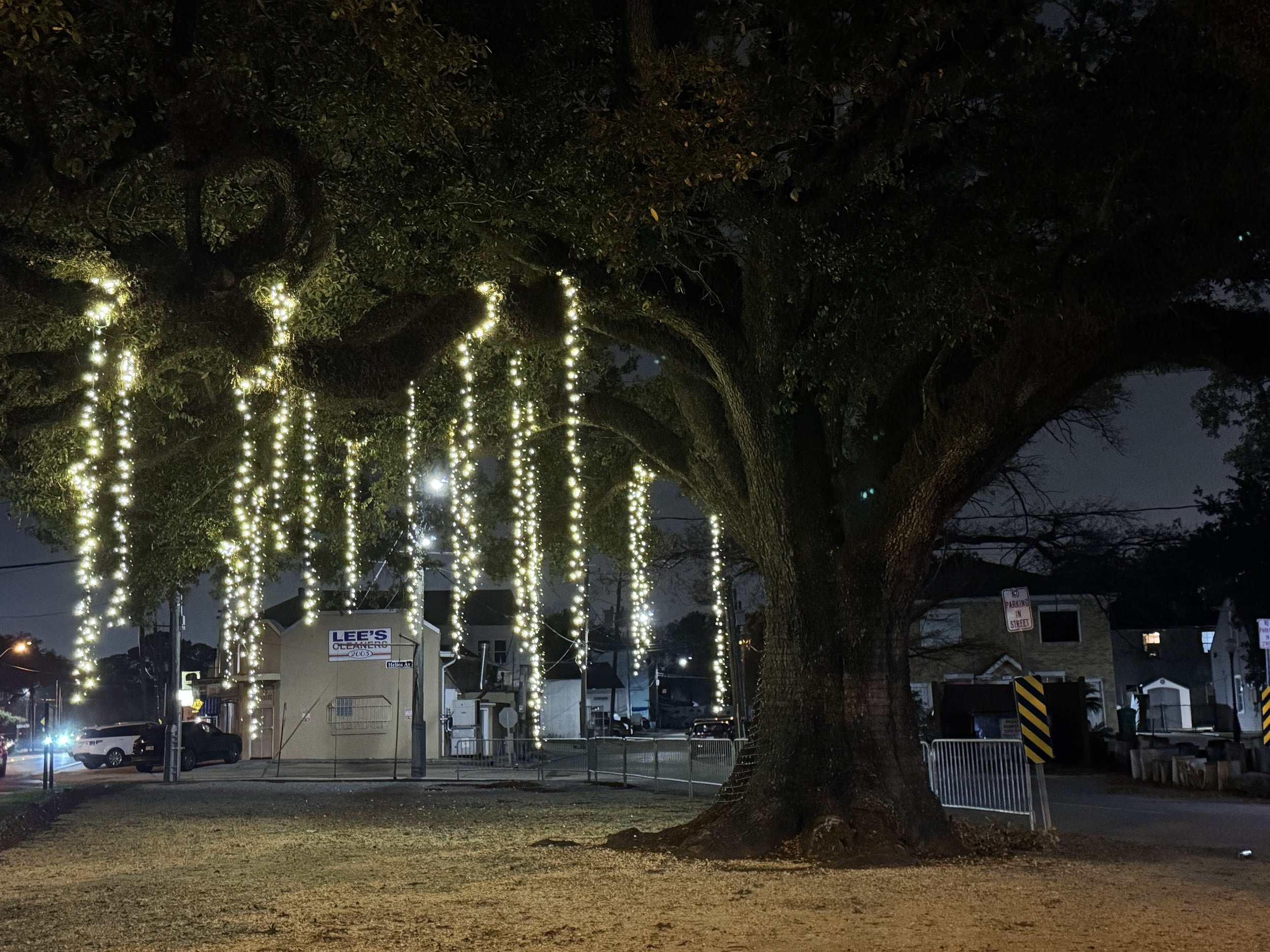
Hanging tree lights are strands of warm white LED mini lights hung from the limbs of a tree so they fall straight down in columns instead of wrapping around the bark. Heritage Lighting Co. designs them around the shape of your canopy, installs them, keeps them lit through the season and takes them down in January.
Hanging Tree Lights
⭐
Designed for Your Home
⭐
Professional Installation
⭐
Seasonal Maintenance
⭐
Takedown and Storage
⭐ Designed for Your Home ⭐ Professional Installation ⭐ Seasonal Maintenance ⭐ Takedown and Storage
Those Lights Dropping Out of the Trees Have a Name
“Do you do those lights that are dropping out of the tree?” We hear some version of that question every day of the season, usually from someone who saw a lit oak on a drive home and has no idea what to call it. That makes sense, because the trade has never settled on one name. Cluster lights, cascading lights, whimsical lights, tree string lights and icicle string lights all describe the same thing.
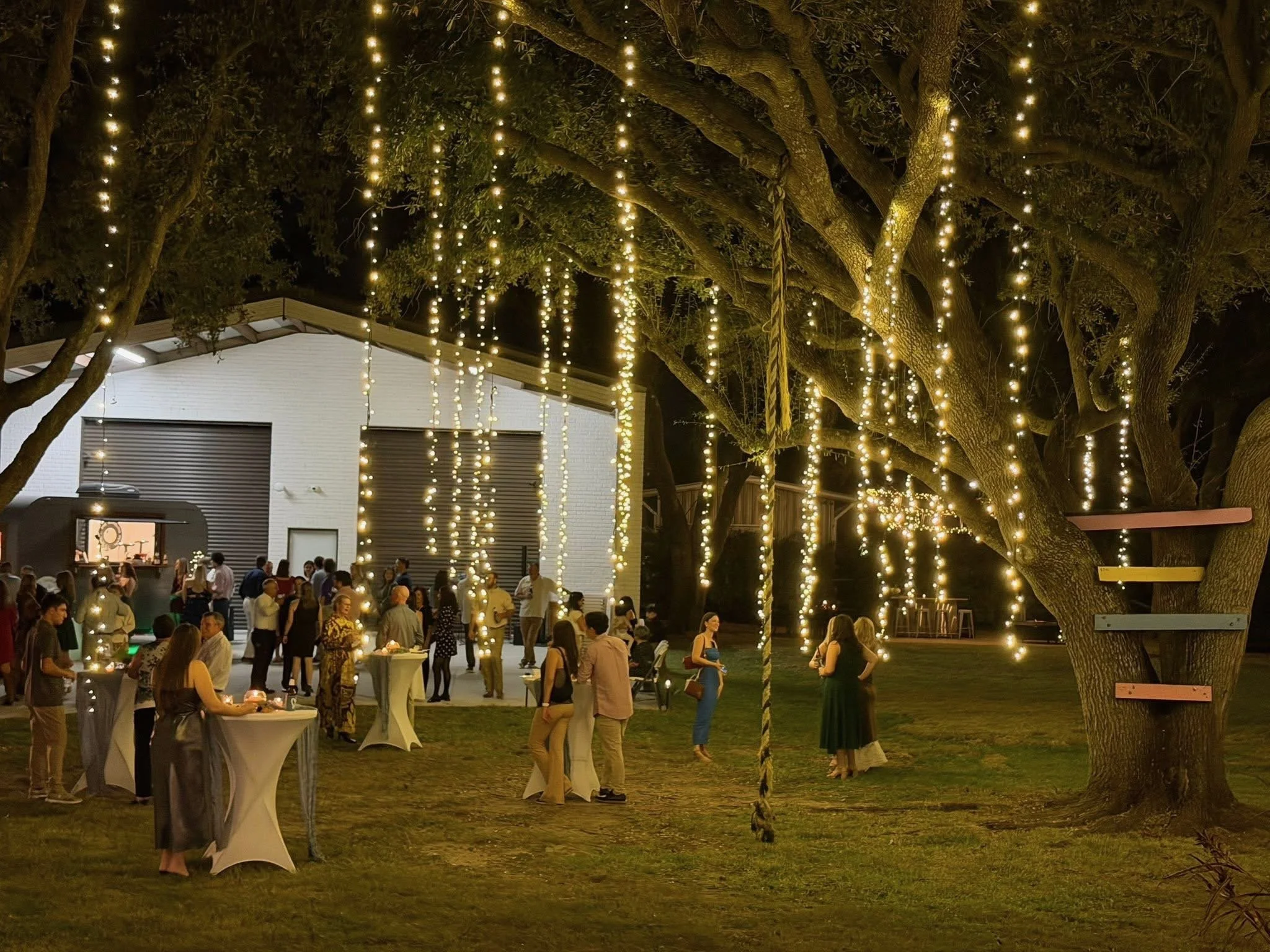
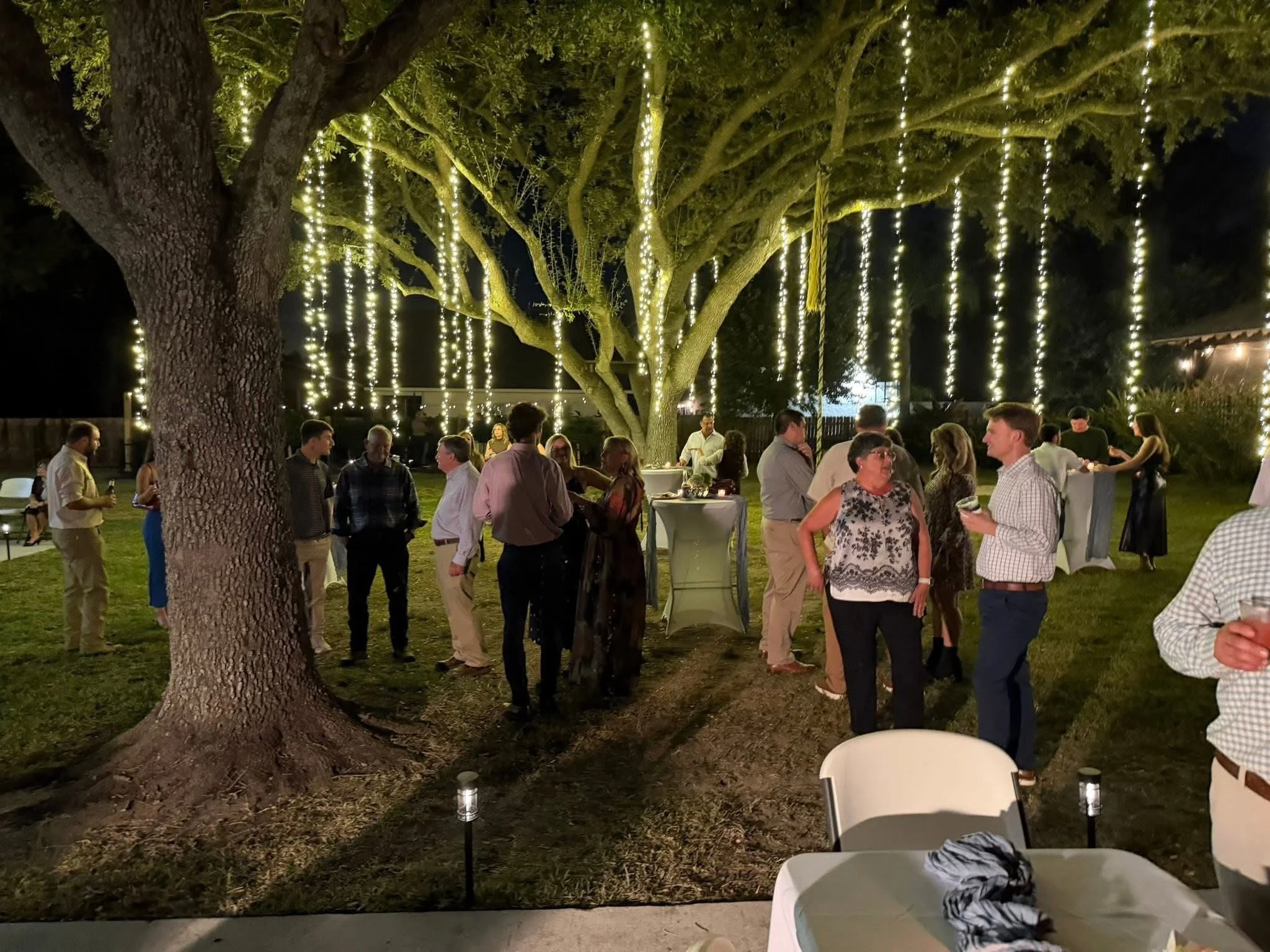
What they describe is simple to picture. Warm white LED mini strands go up into the canopy and hang from the limbs, so each strand drops in a straight vertical line toward the ground. Dozens of those lines together read as a curtain of light falling out of the tree, and on a breezy night the whole thing sways a little.
We build them with the same warm white mini light we use on greenery and pathways, which matters more than it sounds. Our roofline runs on warm white C9s and everything softer runs on warm white minis, so the tree, the front door and the eaves all sit in one color family. Put a cool, bluish white in the oak next to a warm roofline and the yard and the house stop looking like they belong to each other.
On the right tree, hanging lights can carry most of a yard, or they can play a supporting part in a full Christmas lighting design built around your home. Either way, the tree gets its own line on your proposal, so you can see exactly what the canopy adds before you commit to it.
Hanging Versus Wrapping and What Each Does to a Tree
There are two ways to put light into a tree, and they look nothing alike from the street. Wrapping spirals the strand tightly around the trunk and the main limbs, which outlines the tree’s skeleton in light. Hanging leaves the bark mostly bare and fills the space under the canopy instead, so the light seems to fall out of the tree rather than cling to it.
The method also changes what the tree goes through. Arborists warn that lights wrapped or spiraled around branches can girdle them over time, choking the part of the limb beyond the wrap as it grows. Strands laid over a limb and allowed to drop don’t encircle anything. That is one reason we are moving our tree work toward hanging and away from heavy wraps.
The right tree makes the difference. A mature live oak in an open yard can spread 60 to 100 feet wide on massive horizontal limbs, which gives every strand a clean place to start and plenty of room to fall. Established trees take the light easily. A young tree with thin, flexible branches is better left alone, and if a limb starts to bend under the load the strands come off.
Doing it yourself is where most attempts stall. The limbs that give the best drop on a big oak usually sit well above the reach of a household ladder, and the strands have to fall at even lengths to look intentional. Every run also needs outdoor power on a GFCI-protected circuit, routed so it doesn’t trail across a lawn people walk on.
Make the Tree the Show or Let It Frame the House
A lit canopy changes the balance of a display. Decide early whether the tree leads or supports, because that choice drives where the strands go and what gets added around them.
The Tree as the Centerpiece
On a property with one great oak, the canopy can be the whole point. We hang strands across the full spread of the limbs so the light fills the space from trunk to drip line and pools on the grass underneath. The roofline stays simple and acts as a frame, often a single clean run of warm white along the front eave, so nothing competes with the tree. It suits deep front yards where the oak sits between the street and the house.
Hanging Lights with a Lit Roofline
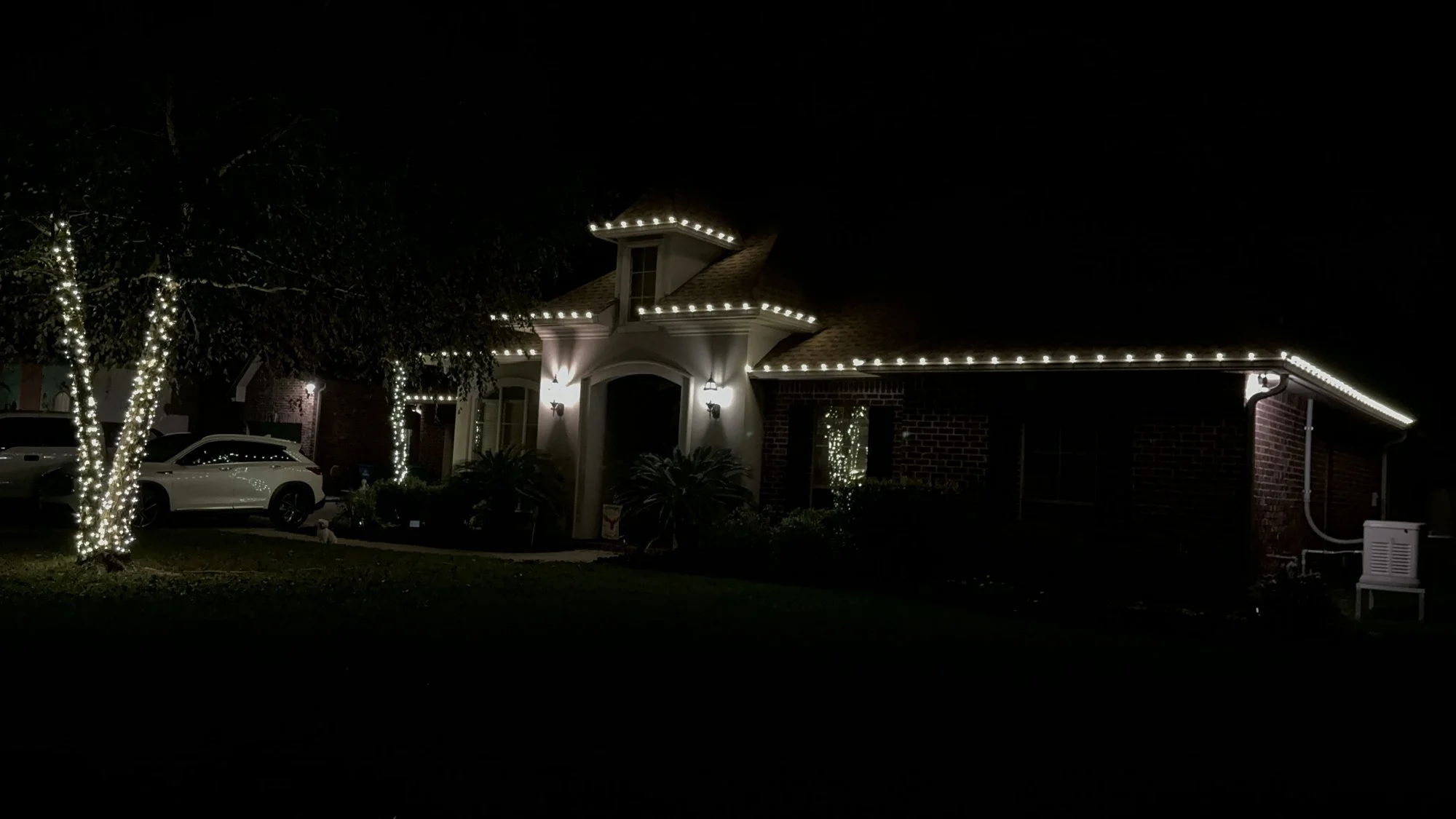
When the house has strong lines of its own, the tree plays a supporting part. A warm white C9 roofline traces the eaves and gables, and hanging strands drop from one or two limbs nearest the house to soften the front of the yard. The two pieces share a color temperature, so the bold outline and the soft curtain read as one design rather than two separate purchases.
Choose What Hangs Under the Branches
A hanging tree display can be a single limb or an entire canopy. Each option below appears as its own line on your proposal, so you can add a piece, price it and decide without reworking the rest of the design.

A Roofline to Frame It
A warm white C9 roofline gives the house a clean outline behind the lit tree. It is the base of every proposal, and it shares a color temperature with the mini strands in the branches, so the canopy and the eaves read as one design from across the street.

Wreaths and Garland
Hanging lights pull the eye into the yard. Pre-lit wreaths and garland bring it the last few feet to the door, using the same warm white mini light so the tree and the entry match. Bows are included, roughly two per piece, in nylon that stands up to the sun.

Single Limb Accents
One strong limb lit over a driveway, a front walk or a garden path. It costs less than a full canopy, works on trees that are too young or too sparse for a complete drop, and gives the front yard a focal point that guests walk underneath on the way in.
Full Canopy Drops
Strands hung across the whole spread of the tree, from the limbs near the trunk out to the edge of the canopy. On a wide oak this fills the space under the branches with a curtain of warm white light and turns the tree into the centerpiece of the property.
Pricing a Tree Into Your Display
The roofline is the base of every proposal, and hanging tree lights sit on top of it as their own line. The ranges below are the same ones we publish across the site. A single lit limb will move your number very little; a full canopy on a large oak is often what lifts a display from the standard range into the expanded one.
Three things set the price of the tree line: size (how wide the canopy spreads and how high the starting limbs sit), density (how many strands you want and how long they fall) and power. A tree in the middle of a lawn needs more work to feed than one beside the house. Sean walks through each one on the visit so you can see where the money goes.
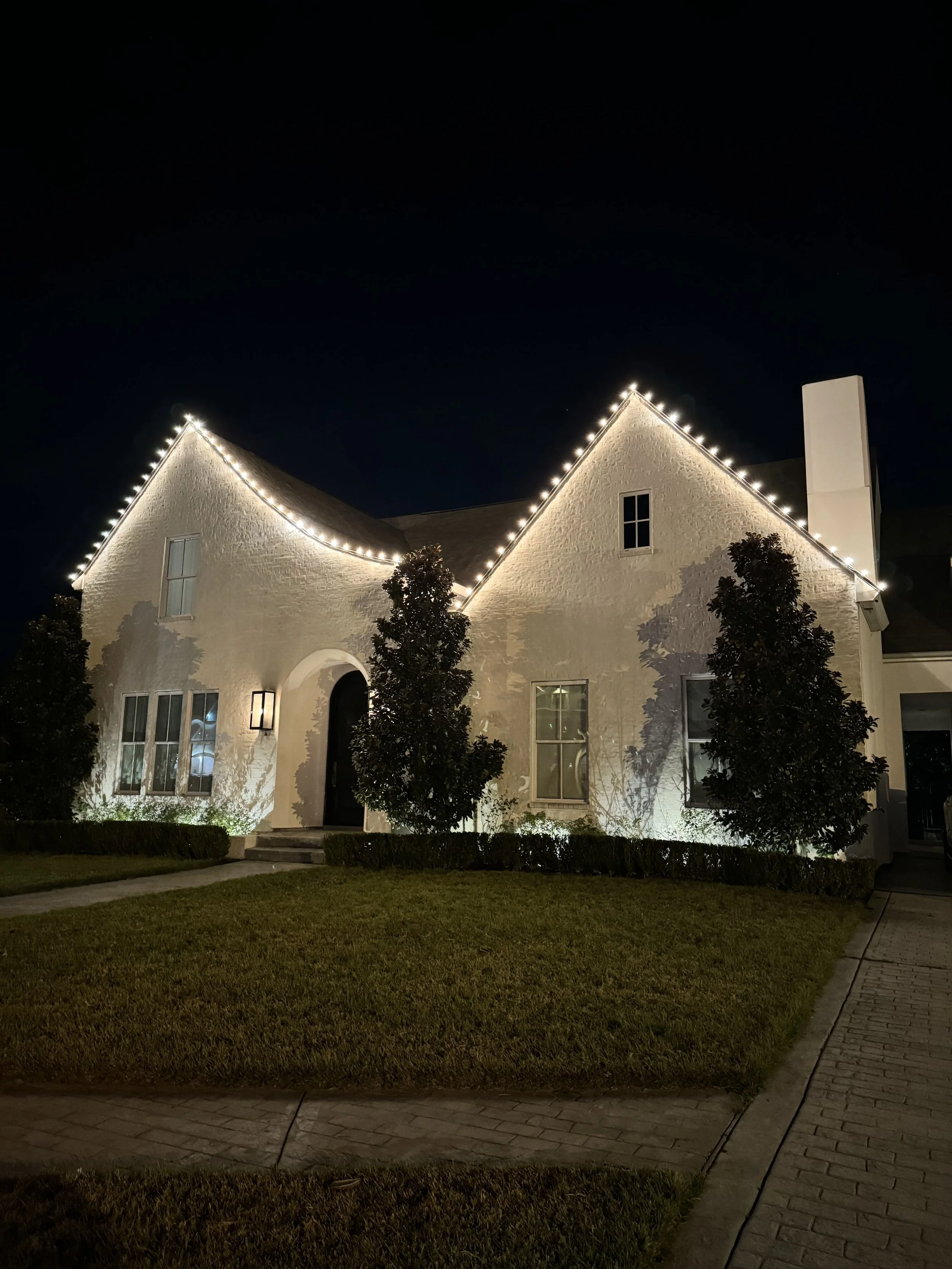
Small Roofline
$899 - $1,199
For a small roofline or front entry section.
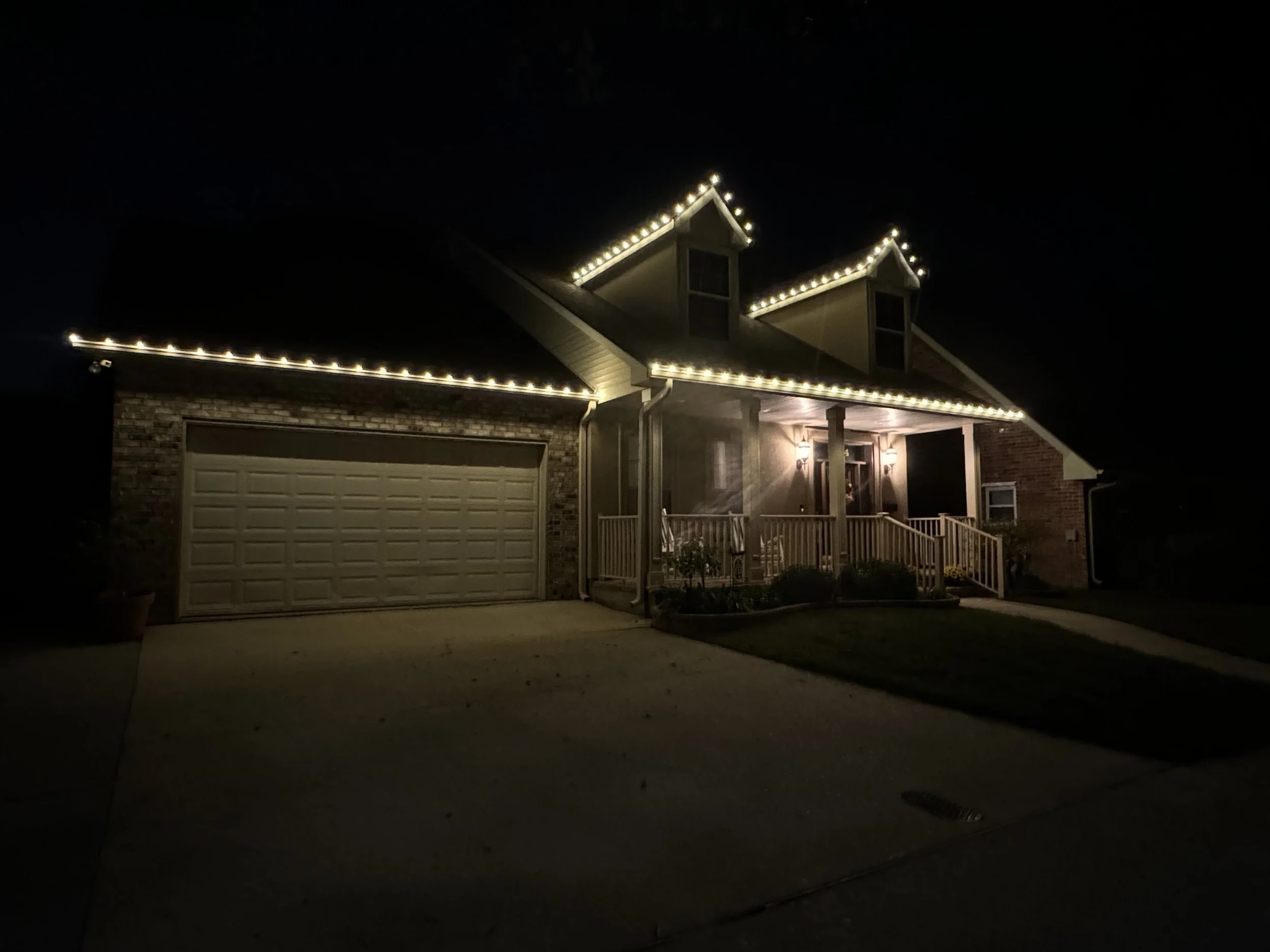
Standard Roofline
$1,200 - $1,799
Our most common range for a standard roofline.
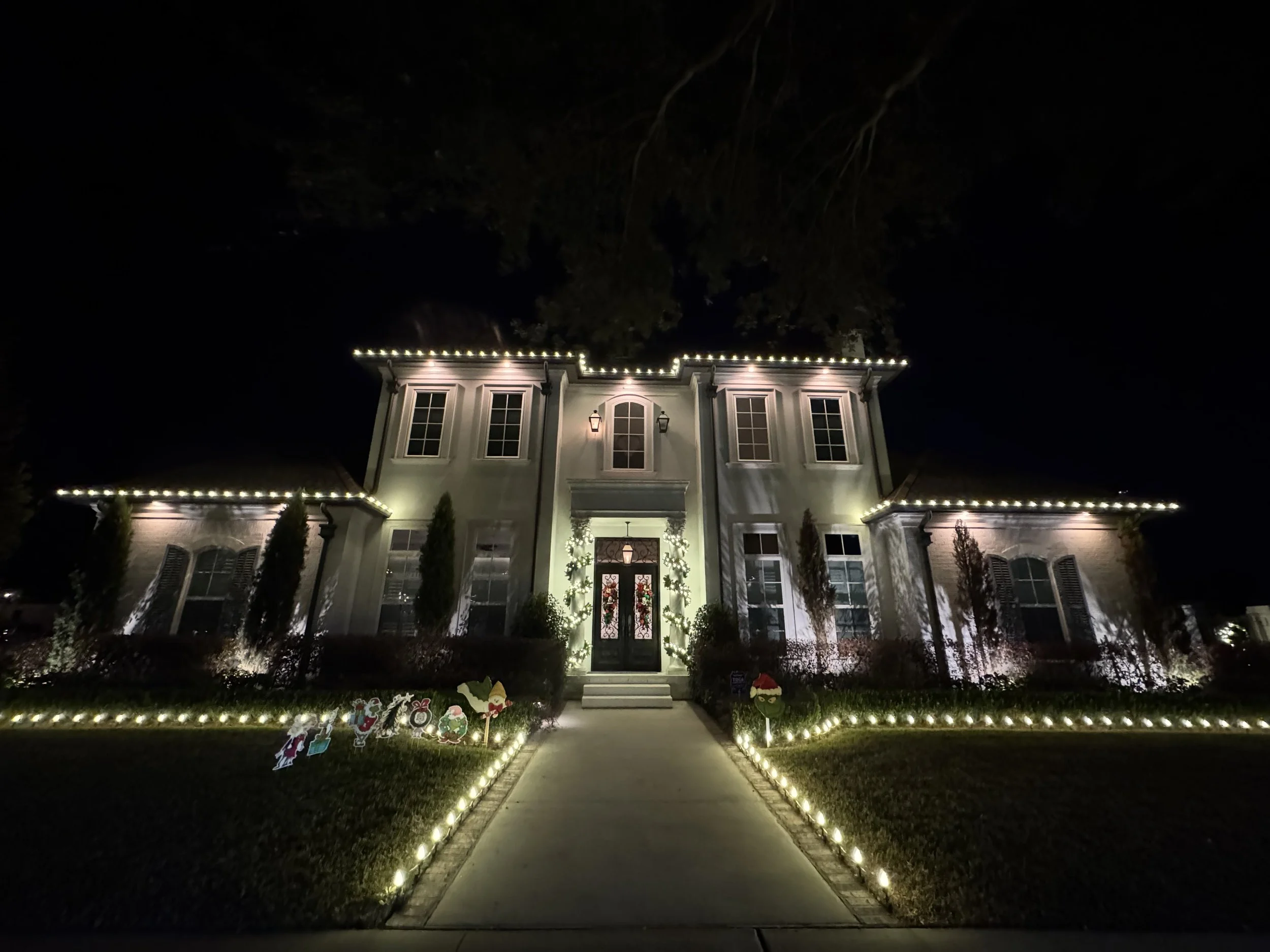
Expanded Display
$1,800 - $2,499
For larger rooflines, trees, and decorative accents.
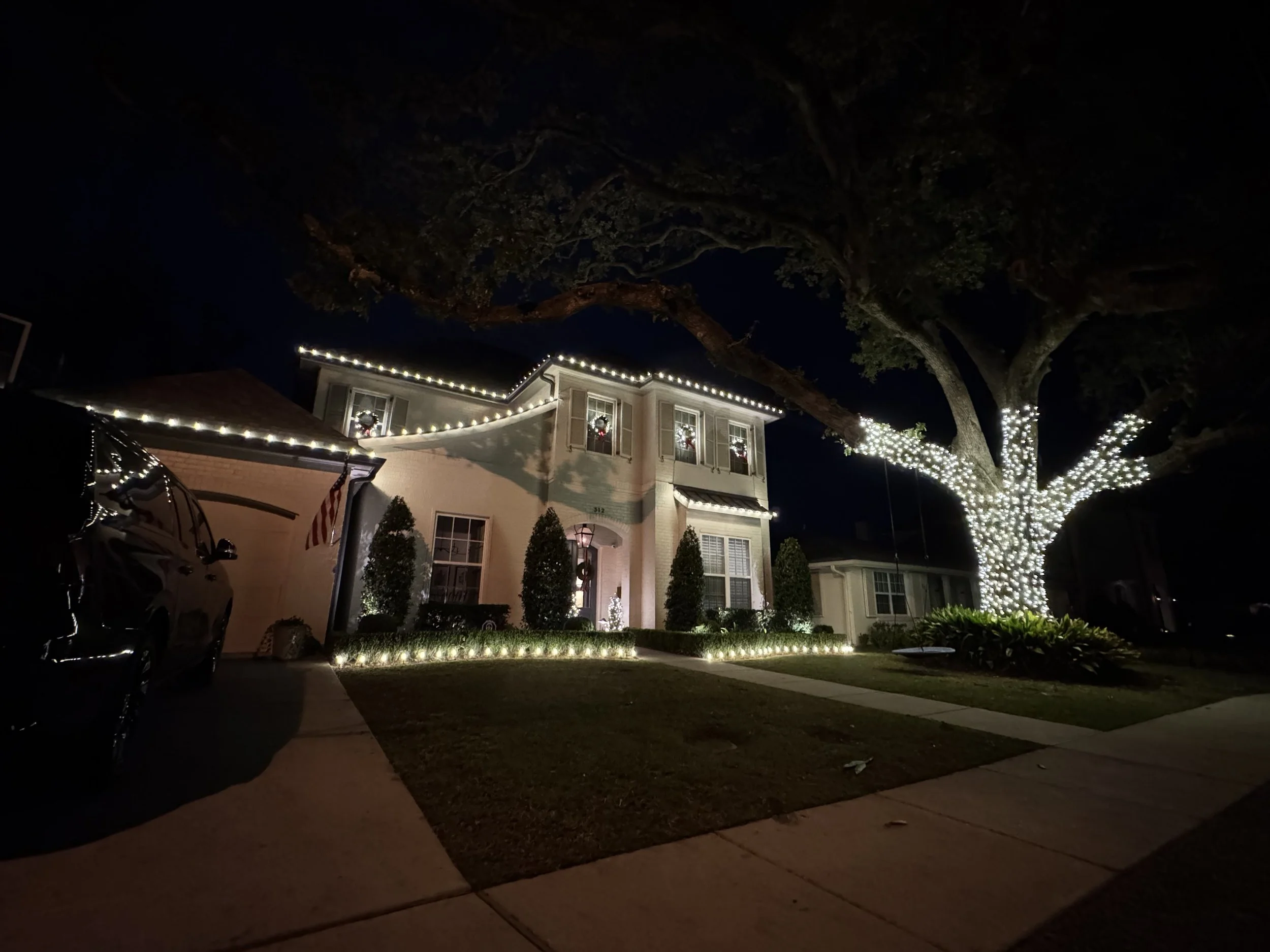
Large Home Design
$2,500+
For large homes or an expanded lighting design.
What Comes with Every Lit Tree

Quality Products
Warm white LED mini strands chosen to match the C9s on the roofline. We carry two bulbs and only two, so the tree never ends up a different white from the rest of the house.

Timely Removal
The strands come off the limbs in January, weather permitting, and the window is set with you in advance. Nothing stays tangled in the canopy into spring for the tree to grow around.

Customized Design
Every tree is laid out on its own: which limbs carry the light, how far the strands fall and whether the canopy leads the display or frames the house behind it.

Light Storage
At the end of the season the minis come back to our shop, get sorted and are stored until next year. You never inherit a box of knotted strands or a ladder job in January.

Free Support
If a storm shifts the strands or a section of the canopy goes dark, call us. Seasonal service calls are included, so a tree that is half lit in December gets fixed rather than billed.

Stay-Lit Guarantee
If a light goes out during the season, we come out and fix it. We own the lights and the replacements, so a failed strand in the canopy is our problem to solve, not yours.
Homeowners on the Finished Display
“Extremely prompt and hard working. Even after the set up he was very communicative on whether we were happy or if we had any issues.”
Courtney Hill
“Sean and his team have made my home the standout of the neighborhood every holiday season. They’re professional, friendly, and their work is beautiful.”
Heather Palmisano
“Heritage lighting installed Christmas lights on our home. The service was excellent and quality was second to none. They really go above and beyond.”
John Collins
For Front Yards, Courtyards and Evening Events
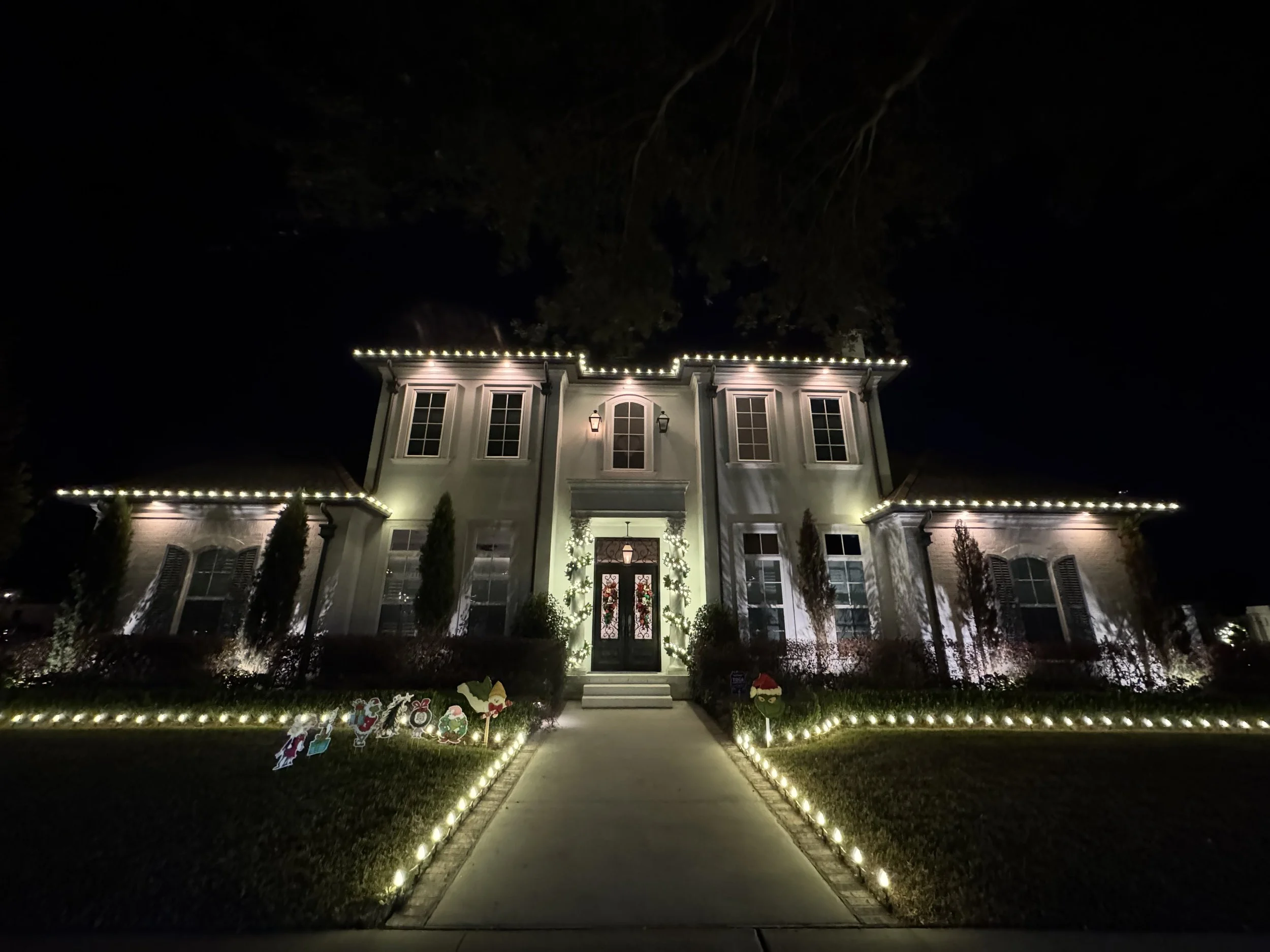
Residential Lighting
On a home, hanging lights usually belong to the tree closest to the street or the one that shades the front walk. We look at where you stand when you pull into the driveway and where guests pause on the way to the door, then choose the limbs that put light over those spots. Warm white is the standard, and multicolor is available by request.
The work around your property follows the same rules as the rest of our installs. Shoes come off at the door, ladders stay off the flower beds, and power runs where nobody trips on it. You get a tree that looks finished from the porch and from across the street.
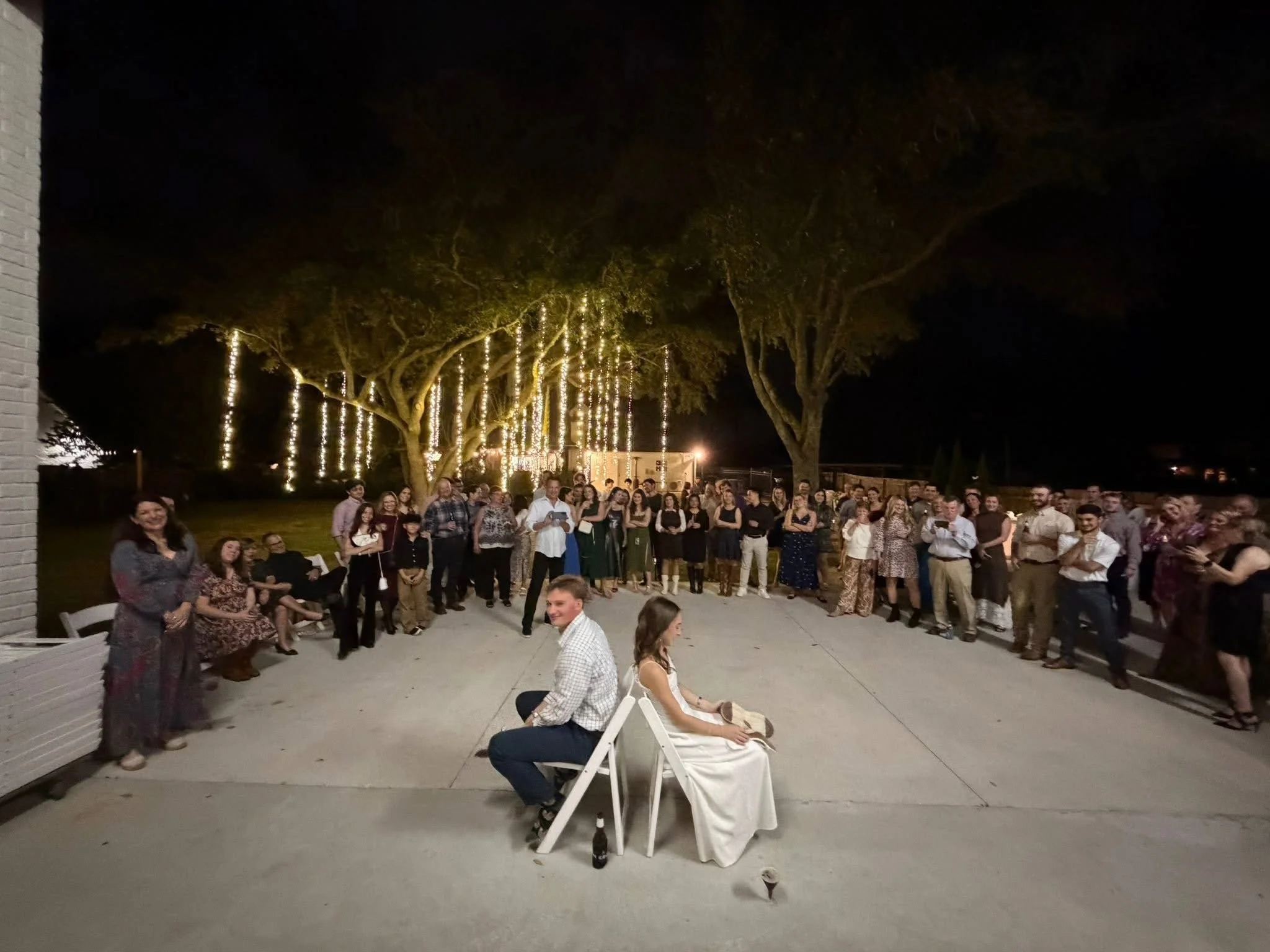
Commercial Lighting
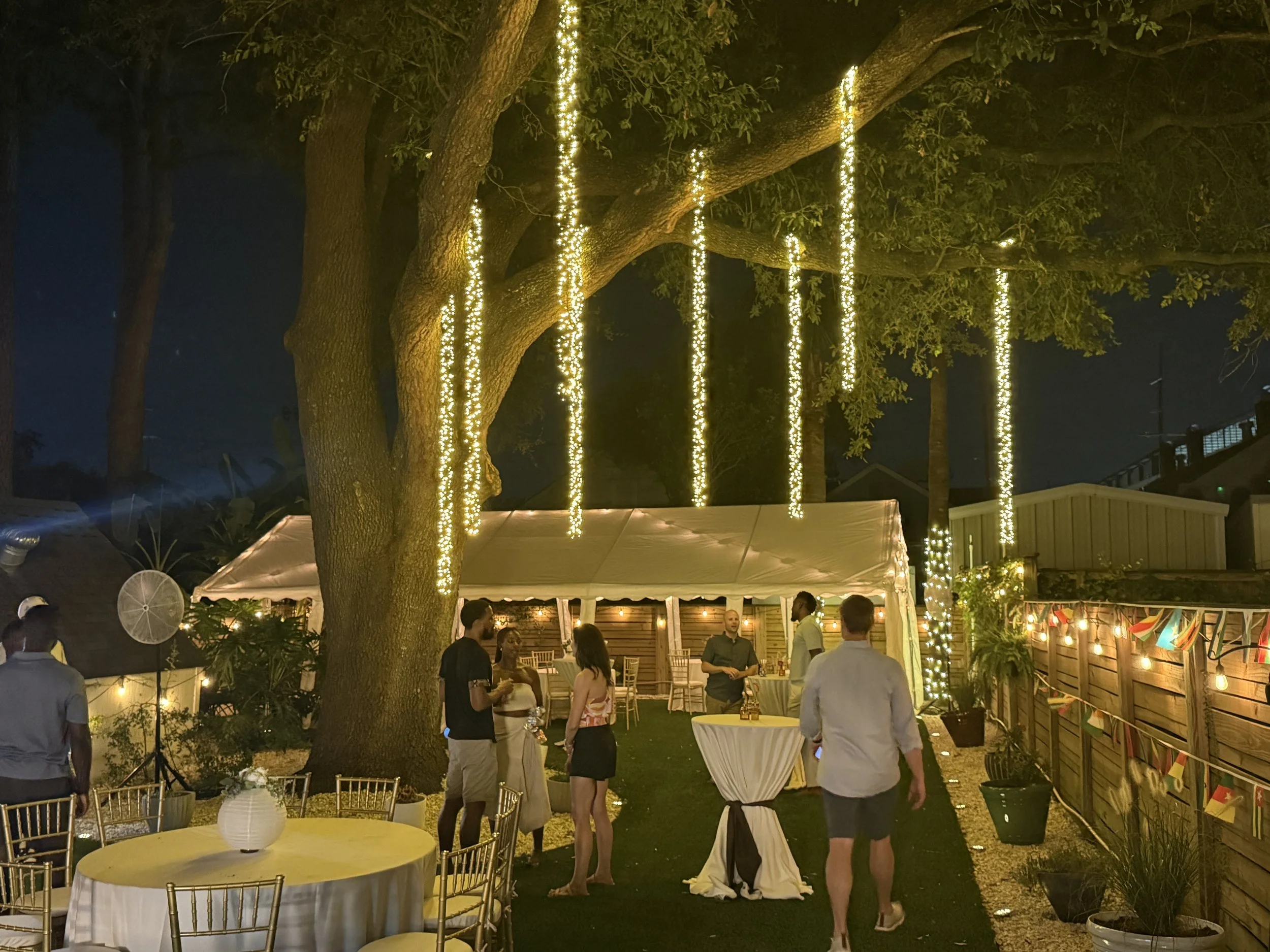
Hanging lights work hard on a business. A lit oak over a restaurant patio, a courtyard or the lawn of an event space turns an outdoor area into somewhere people want to sit after dark. Our gallery includes strands over a backyard event tent, an evening party and an outdoor wedding.
Commercial and event work runs on your calendar. Tell us your operating hours, the date of the event and how long the light needs to stay up, and we will plan the install around them, usually before or after hours. Takedown follows the same care as a home.
From the First Text to the First Night Lit
Send Us the Tree. Text your name, address and a photo or two of the tree from the street. Sean looks at the spread of the canopy, the height of the limbs and where the nearest outdoor power sits before he comes out.
Walk the Canopy Together. Sean visits the property, usually the same evening during the season, and stands under the tree with you. You decide together which limbs carry the light, how dense the drop should be and what goes on the proposal.
Light It and Leave It. The crew hangs the strands, tests every run before leaving and tells you the removal window. If a section goes dark during the season, one call brings us back. In January the canopy comes back to bare branches.
Past Displays, from Rooflines to Lit Trees
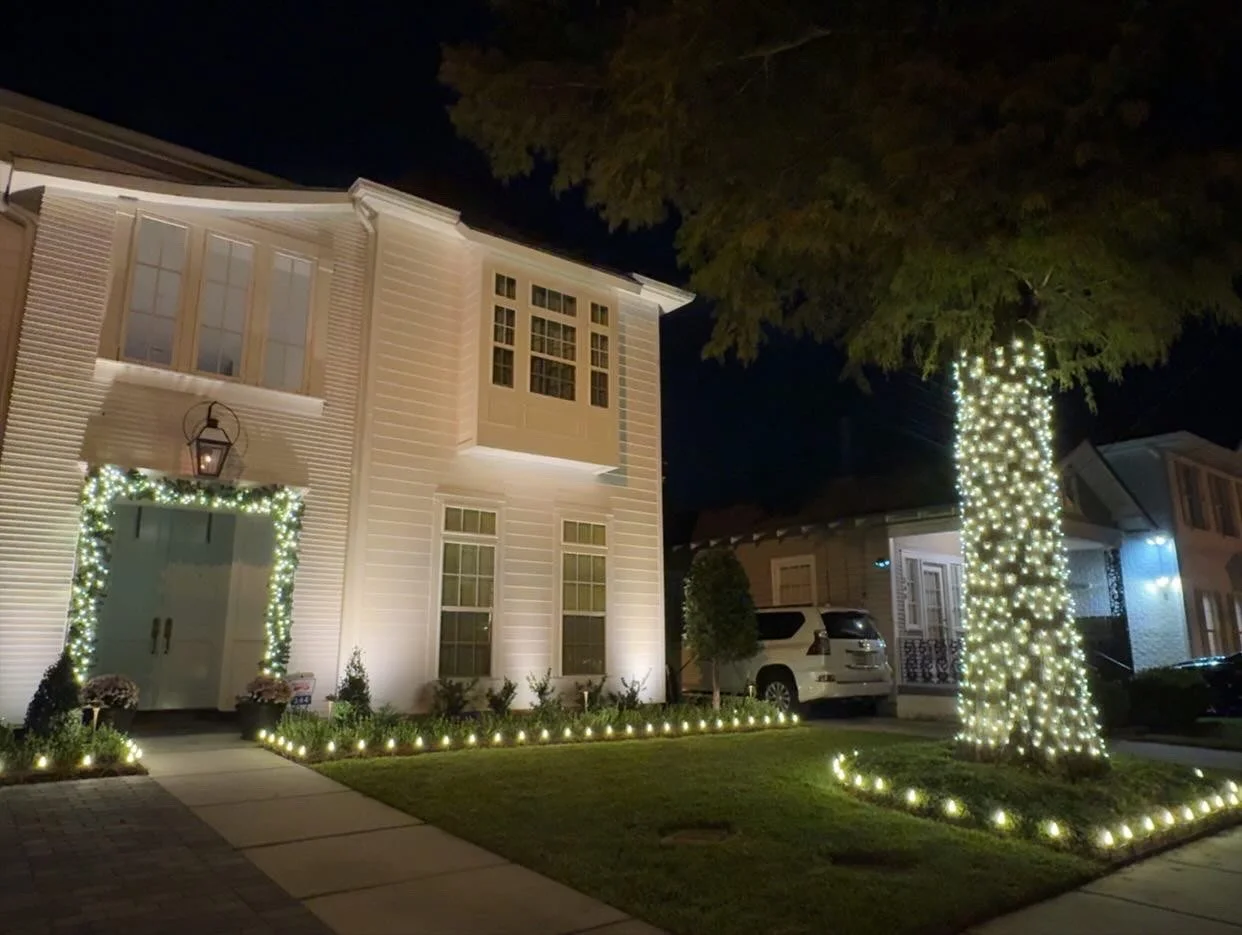
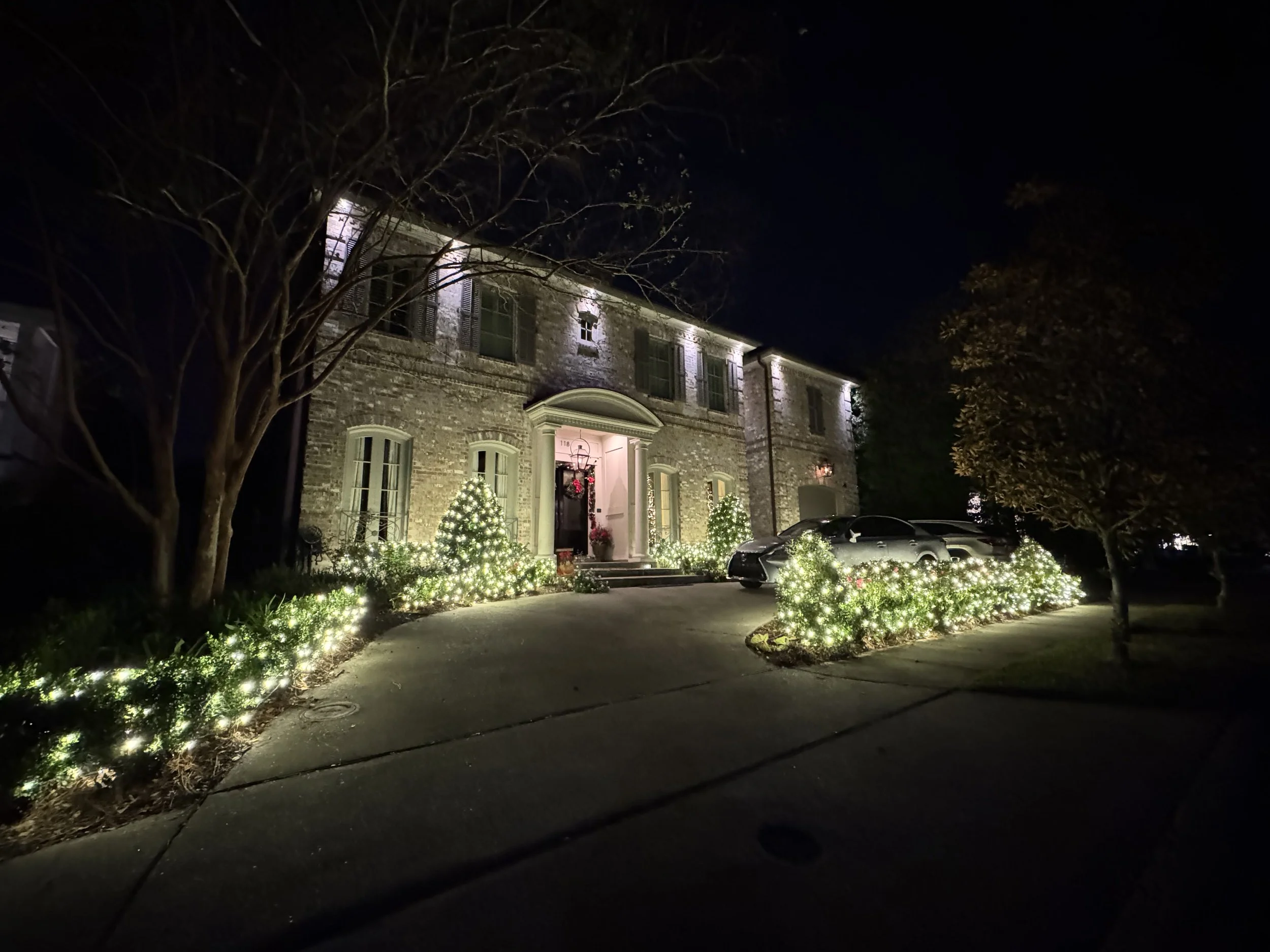
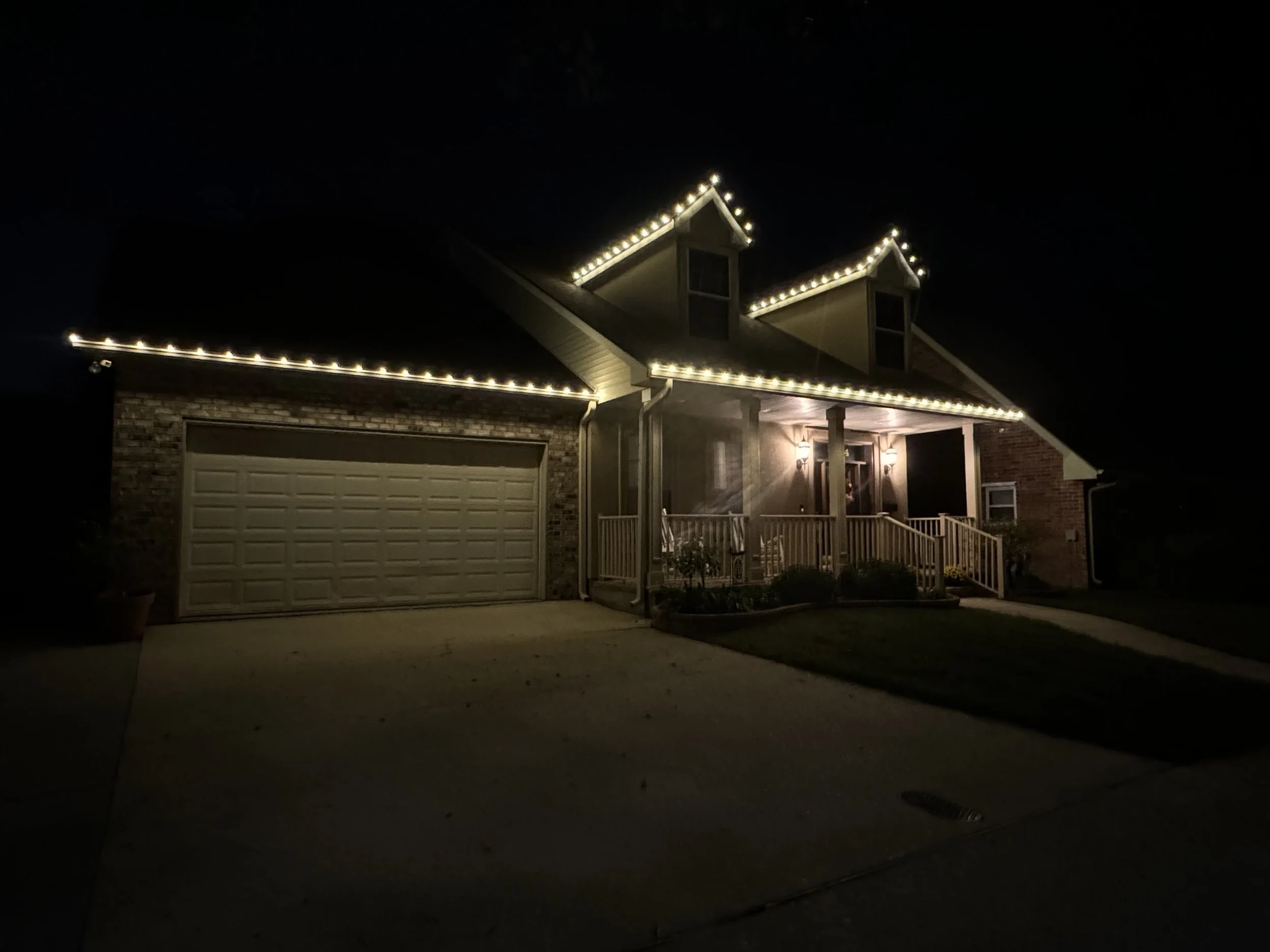
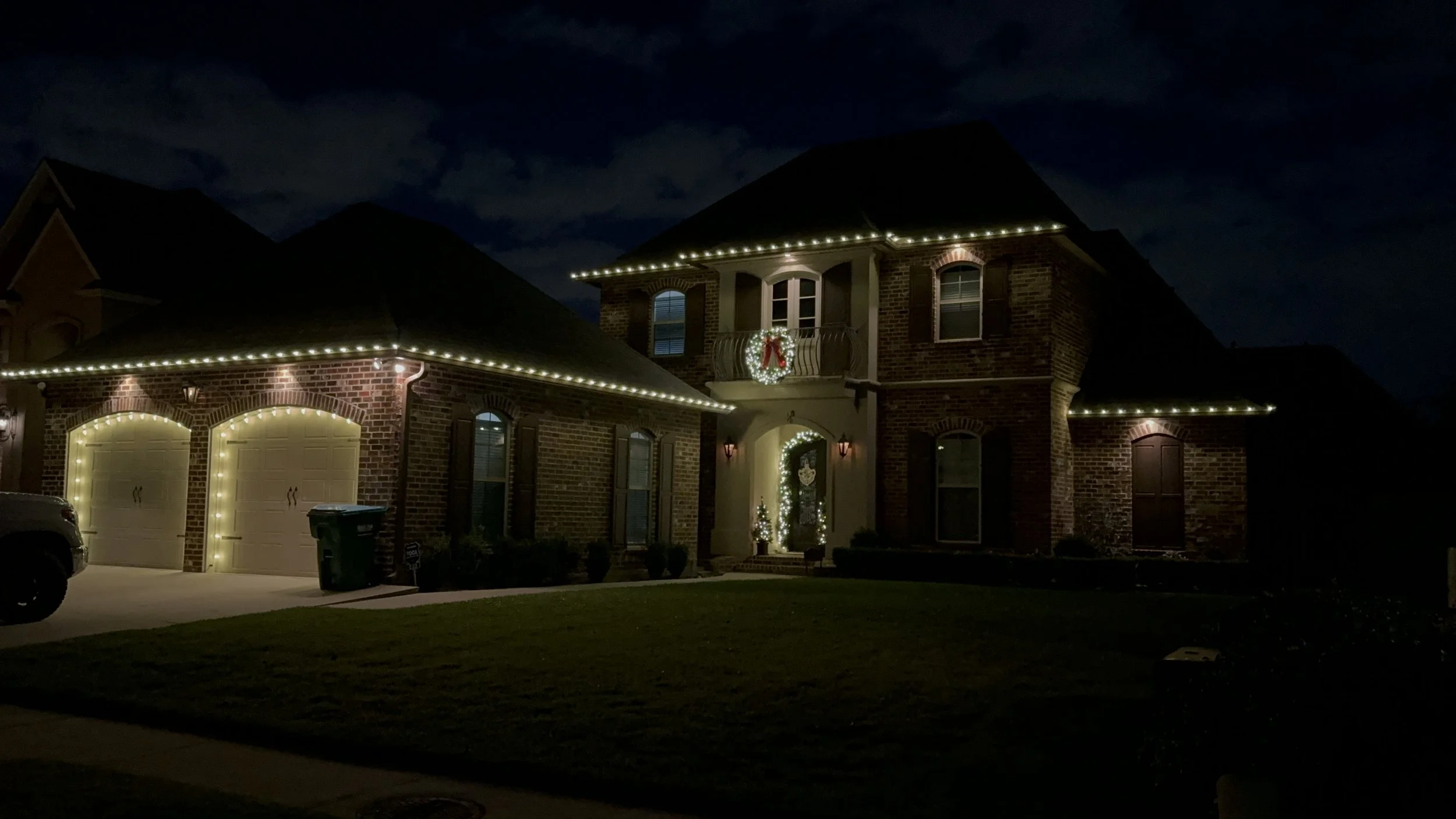
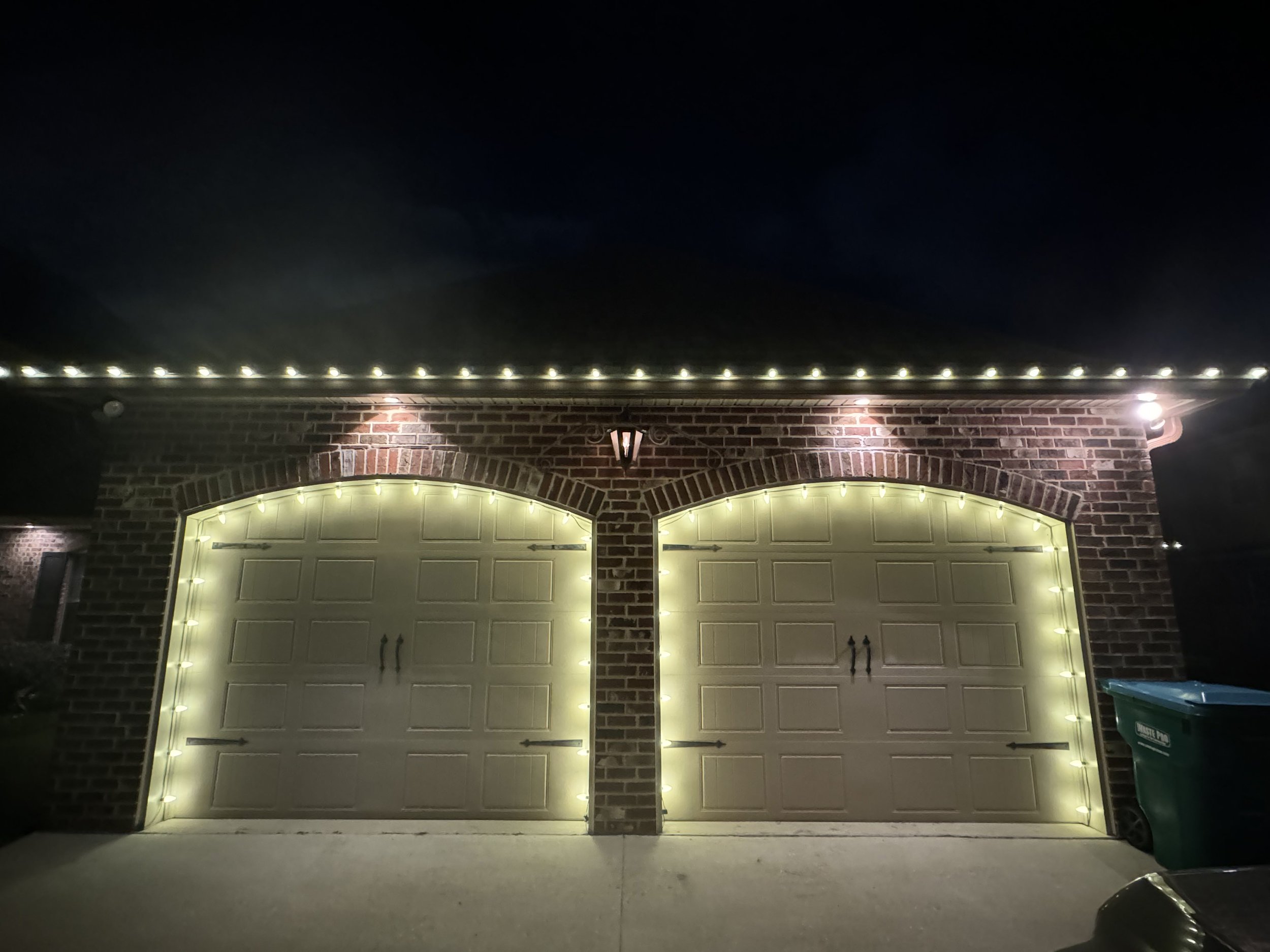
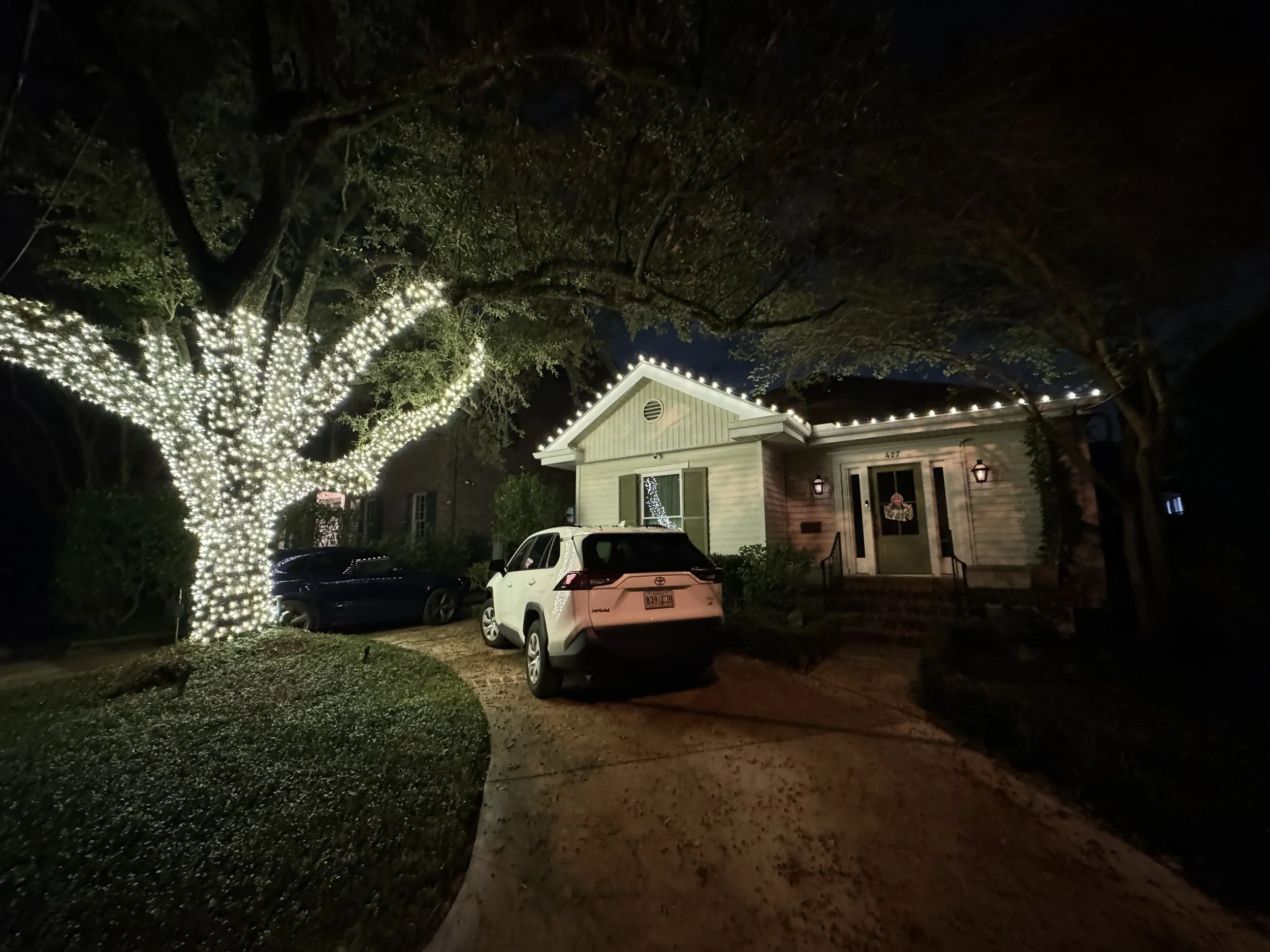
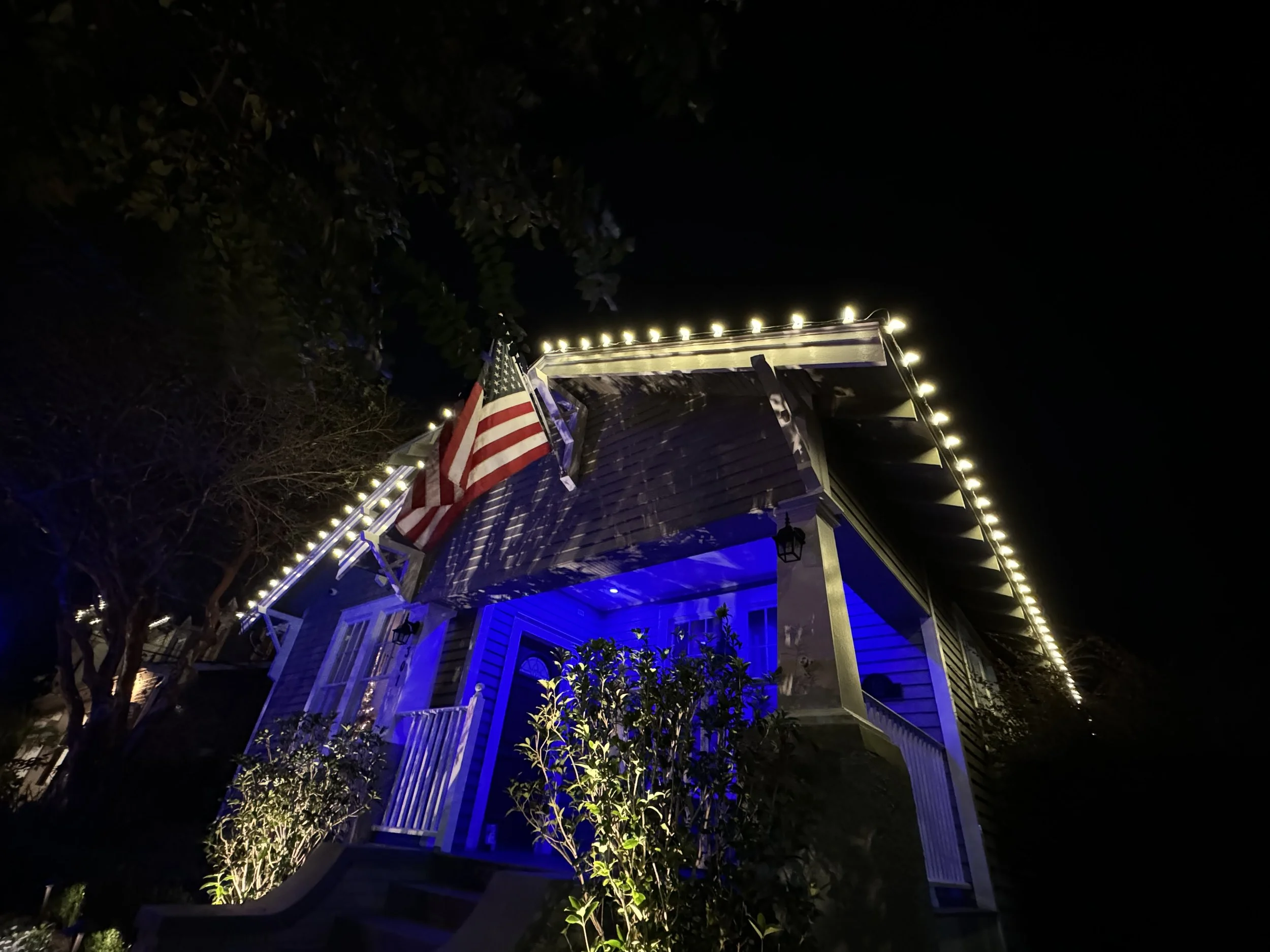
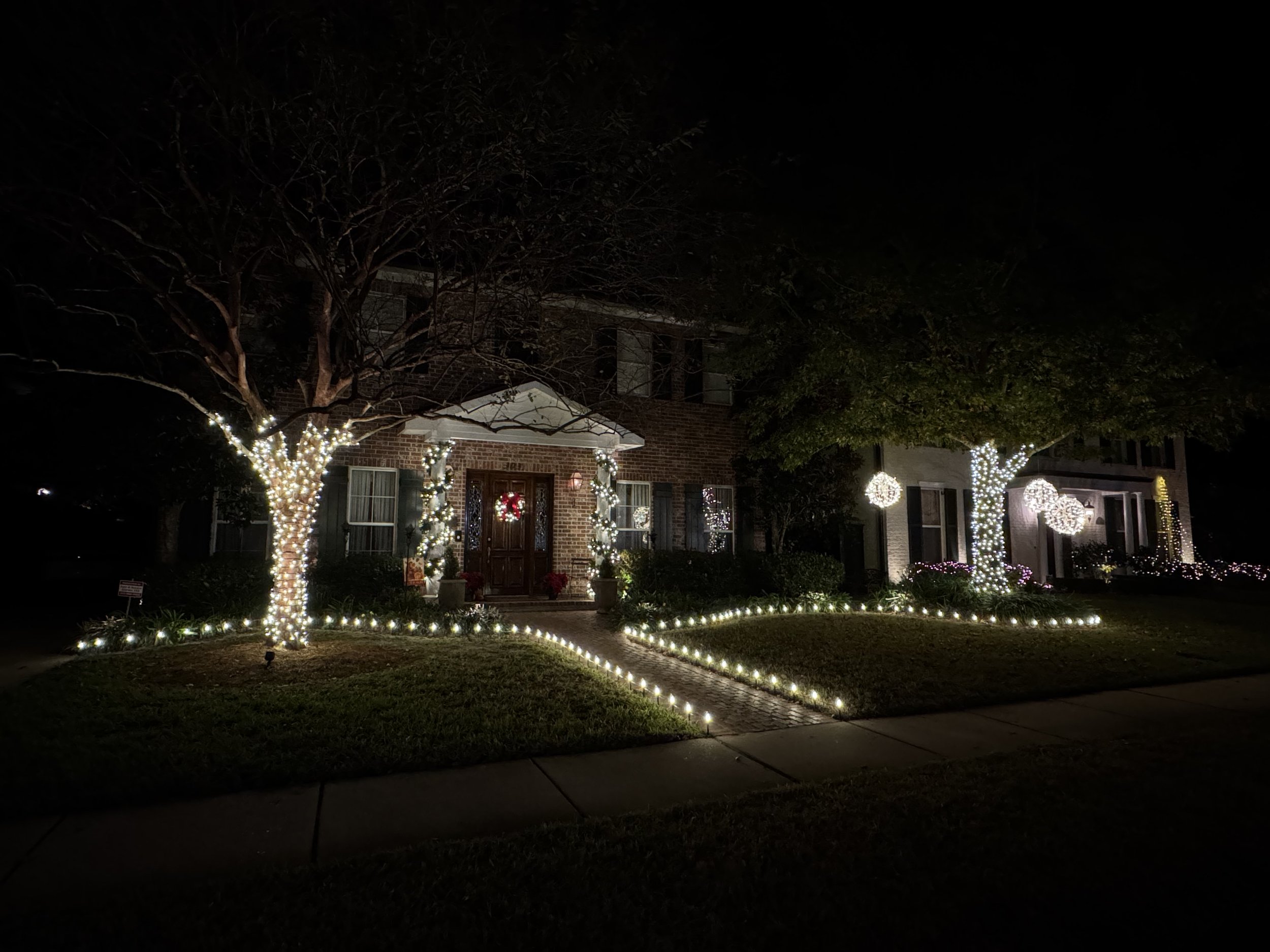
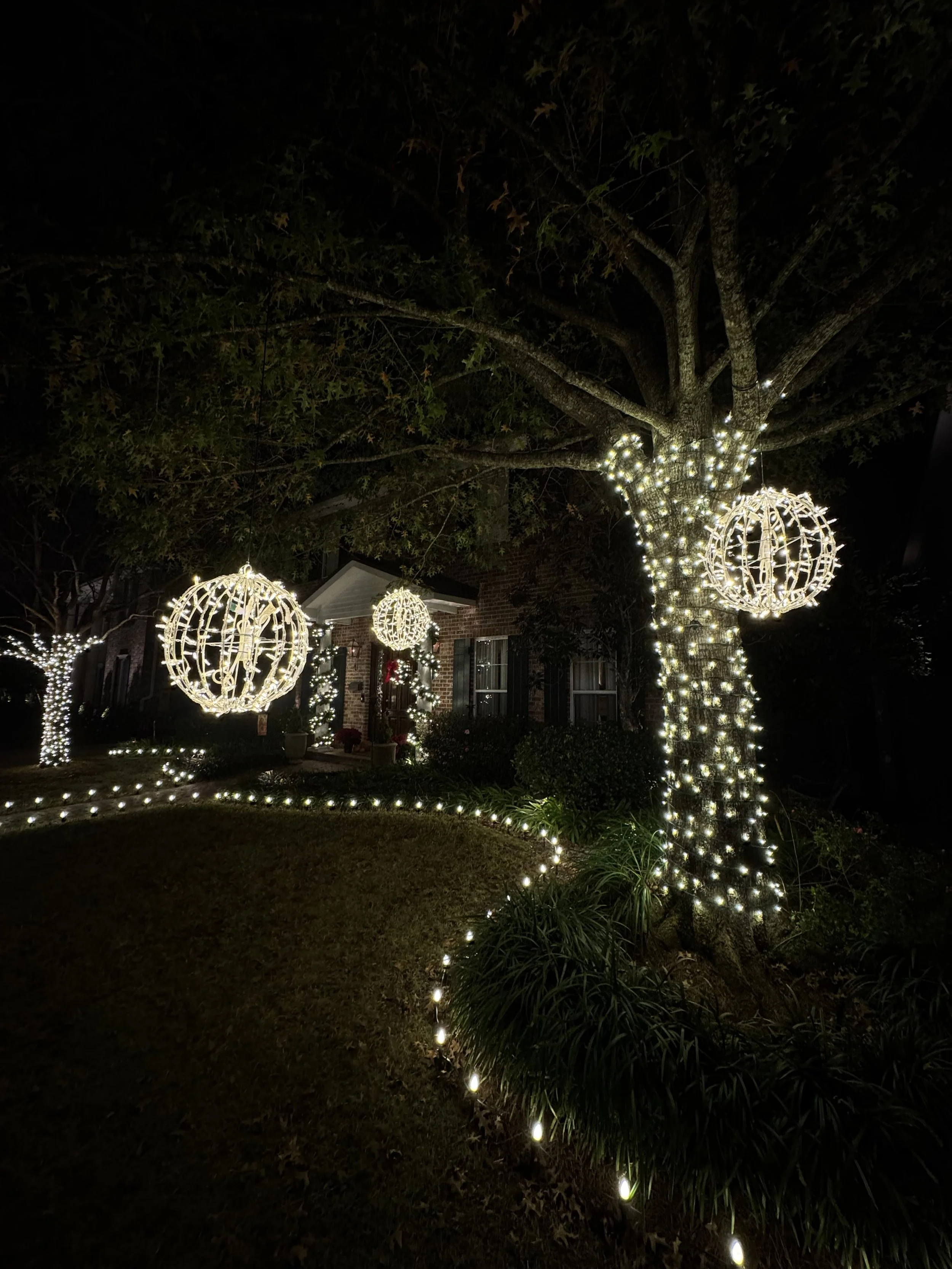
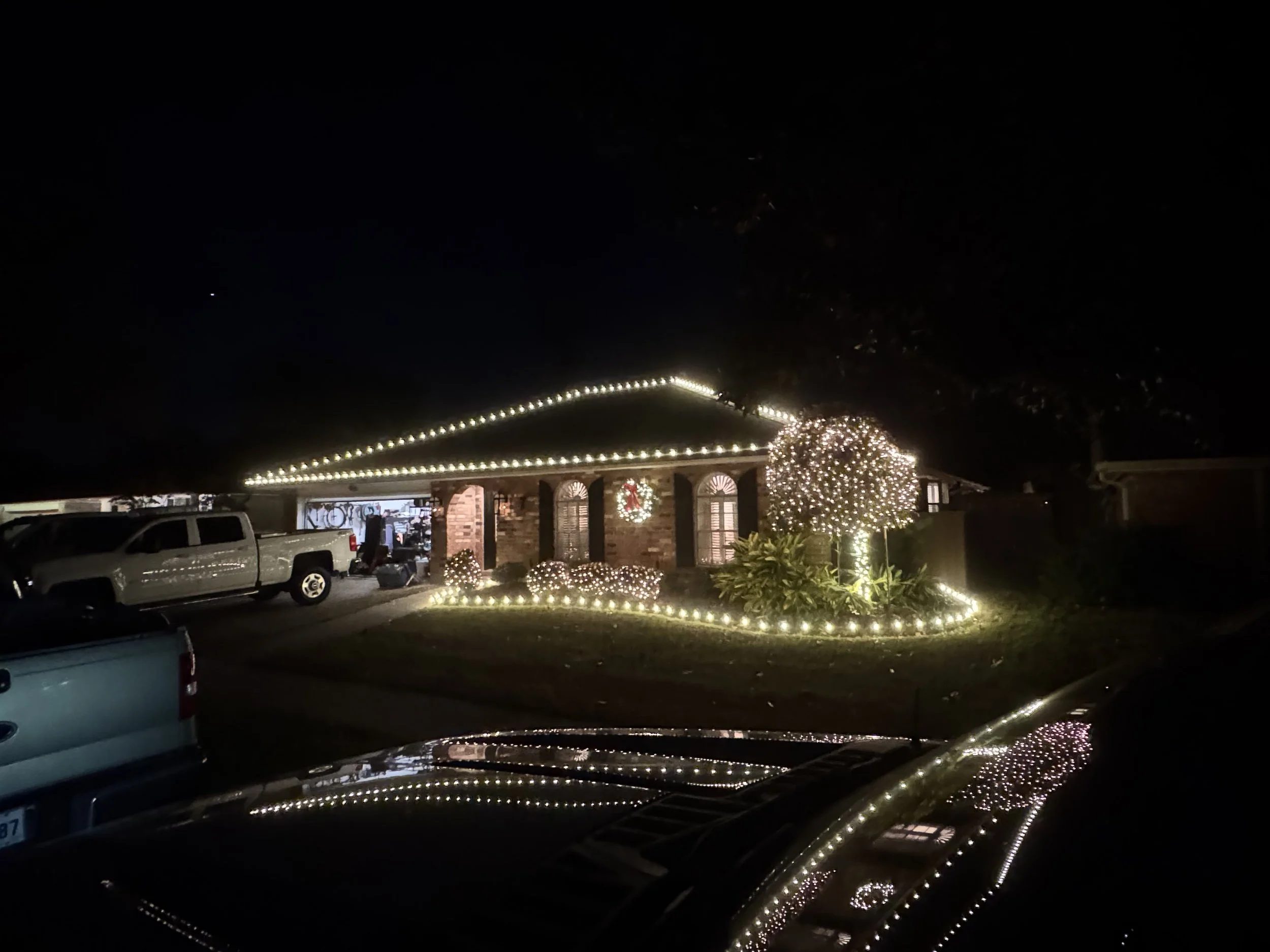
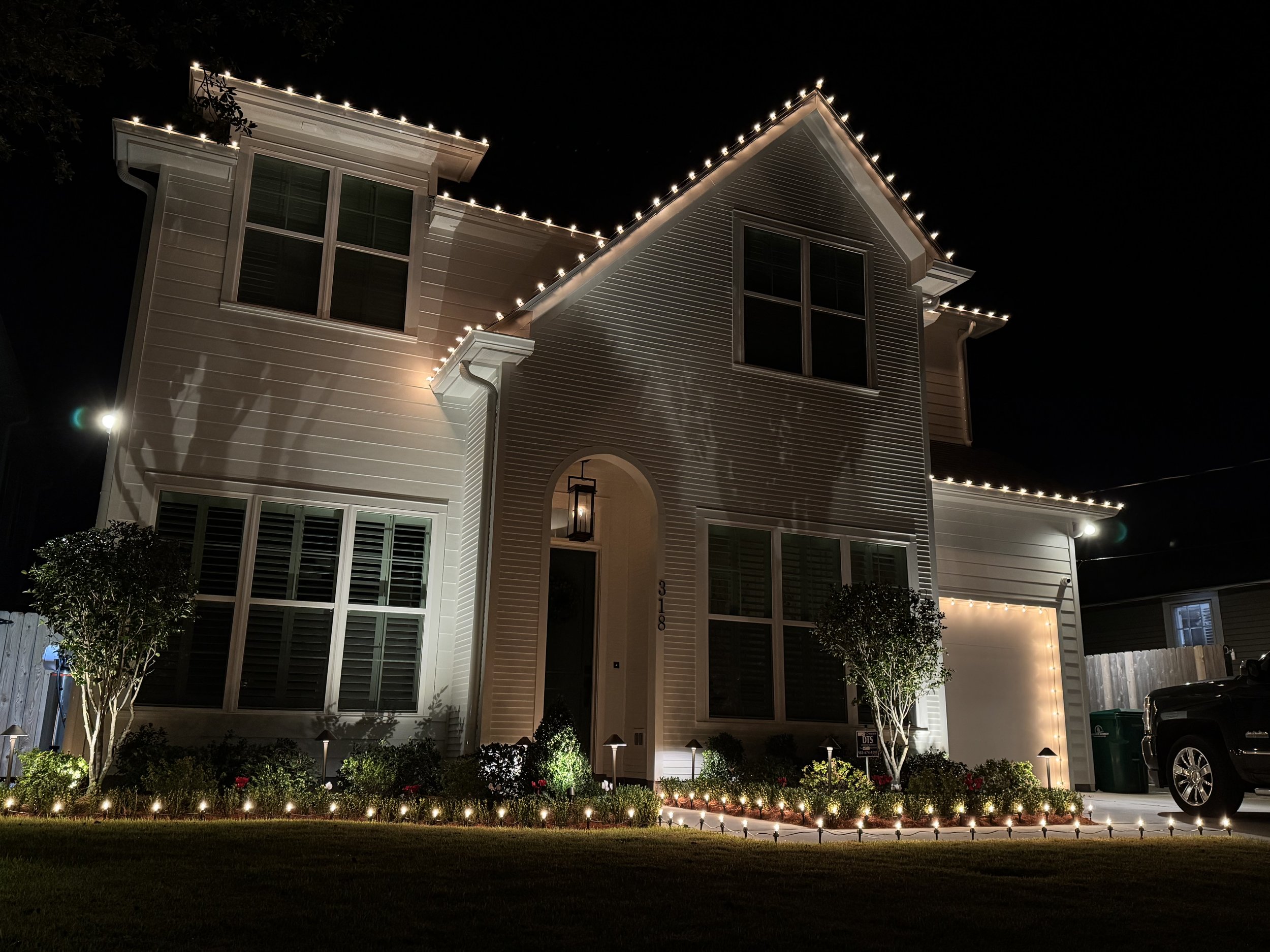
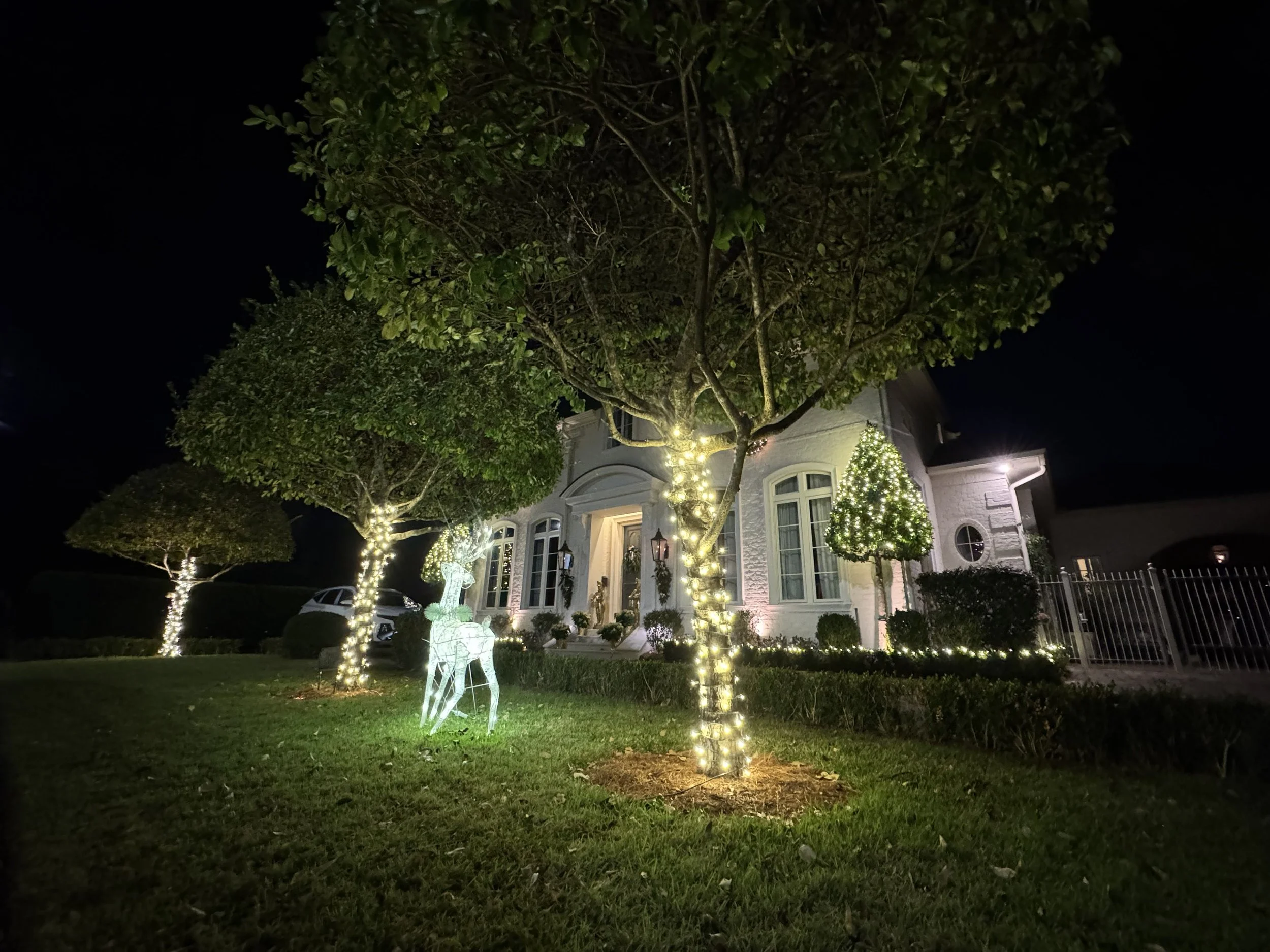
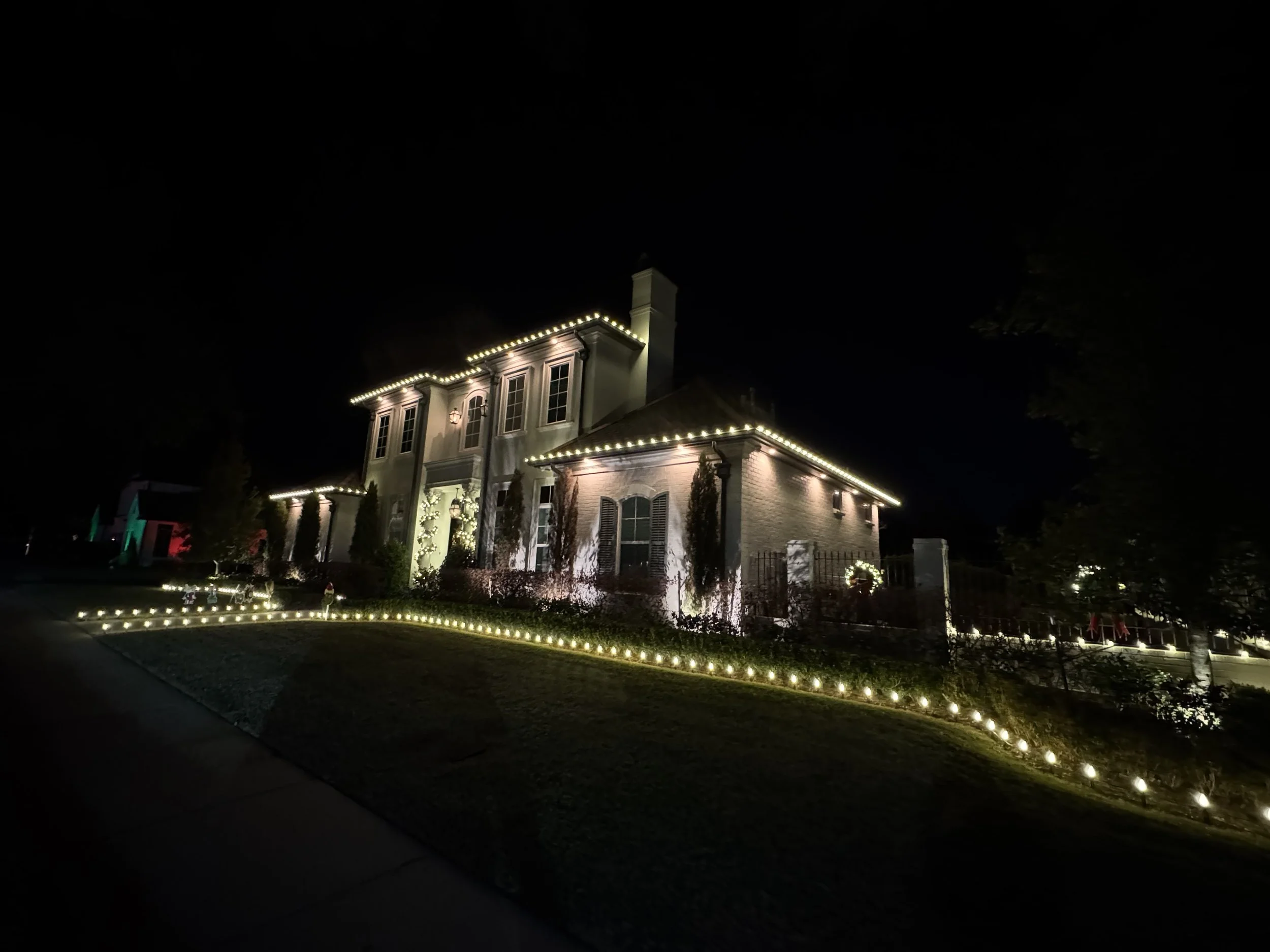
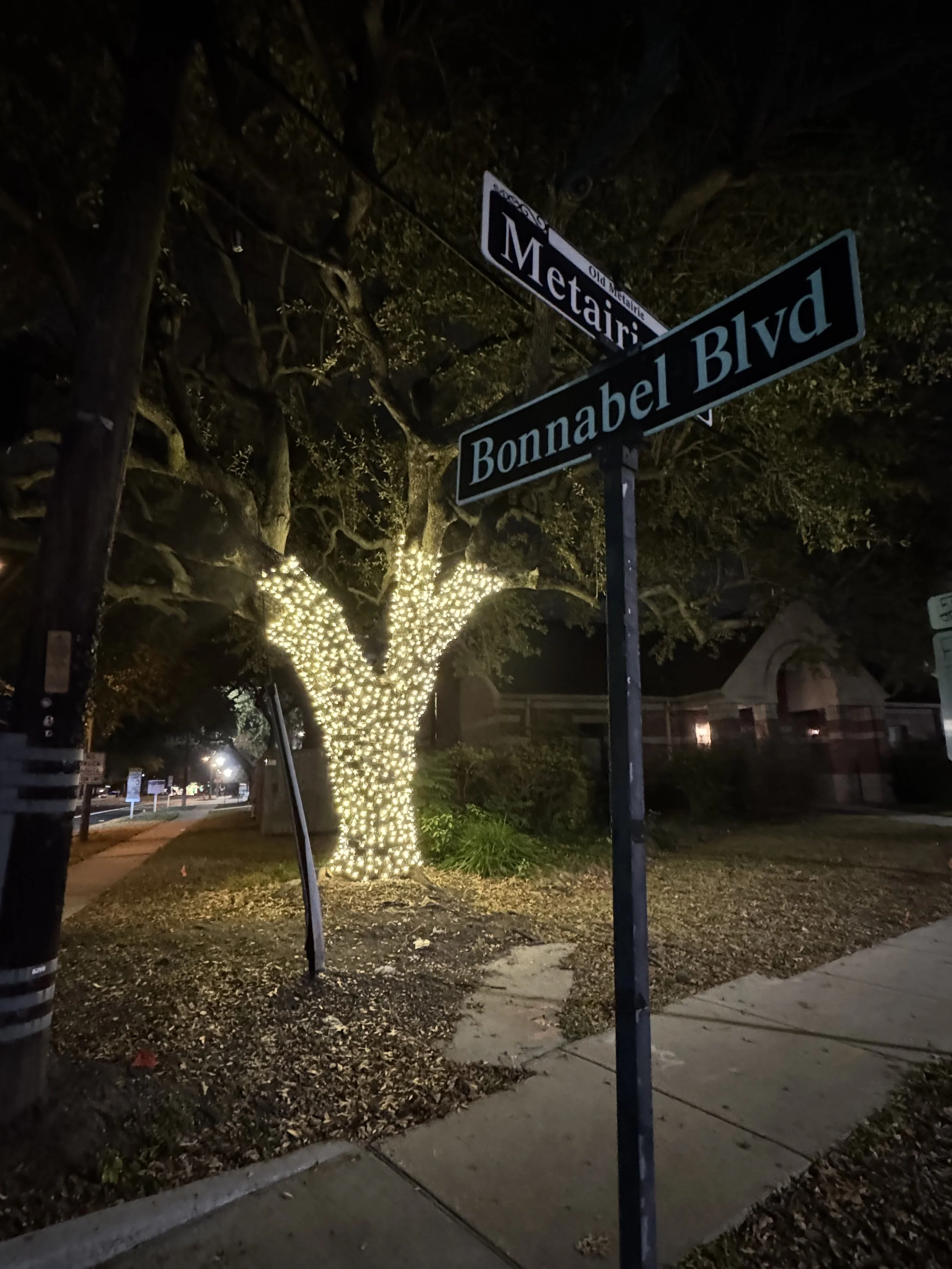
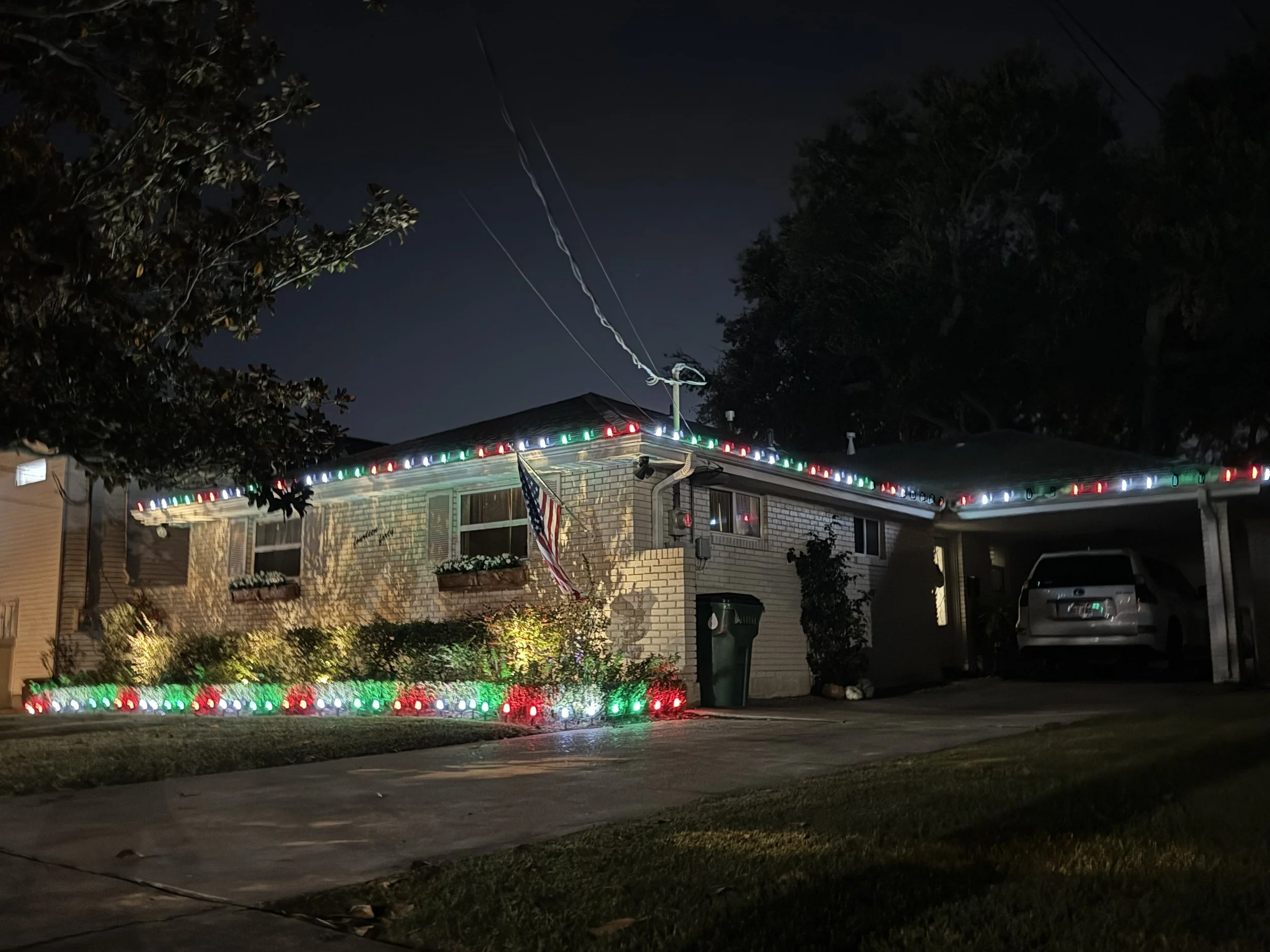
These are real installs from past seasons, photographed at night. Most show how rooflines, pathways and lit trees work together around the house, and the hanging canopies higher on this page show what the drop looks like on a big oak. Browse our gallery for more, then send us a photo of your tree.
Where Hanging Lights Sit in a Complete Christmas Display
A lit tree rarely stands alone. Most of our displays begin with Christmas light installation that starts at the roof and works outward, and the canopy is one of the pieces added after the roofline sets the shape of the house. Planning them together keeps the drop lengths, the color and the brightness in proportion, so the tree looks like part of the property rather than something borrowed from the neighbor.
The pieces build in a particular order. The warm white C9 roofline defines the house, and the hanging strands fill the yard and draw the eye toward it. Then wreaths, garland and nylon bows carry the light the last few feet to the front door. All three use the same warm white family, so the eye moves from the street to the door without a break.
South Louisiana is good ground for this look. Old live oaks with wide, low, horizontal limbs give the strands a place to start and room to fall, and the mild winters mean the display rarely fights snow or ice. If you have a tree like that in the yard, send us a photo and ask how it would light.
Questions Before You Light a Tree
-
There is no single name. Cluster lights, cascading lights, whimsical lights, tree string lights and icicle string lights all refer to the same look: LED mini strands hung from the limbs so they drop straight down. Describe what you saw when you call and we will know exactly what you mean.
-
Hanging is the gentler of the two tree methods. Arborists warn that tightly wrapped or spiraled strands can girdle a branch over time. Strands draped over a limb and allowed to drop don’t encircle it, and an established tree carries them easily. We take everything down in January, so nothing stays in the canopy for the tree to grow around.
-
Mature trees with wide, horizontal limbs, which is why live oaks are the classic choice in Louisiana. Magnolias and other large shade trees can work too. A young or sparse tree is usually better suited to a single limb accent than a full canopy.
-
No. Icicle lights hang from a roofline or gutter in short, staggered drops. Hanging tree lights fall from the limbs of a tree and can run much longer. We install icicle curtains as a separate option, usually along a porch line or covered entry.
-
Warm white is our standard and what most of our clients choose, because it matches the roofline and the greenery. Multicolor is available by request.
-
It depends on the tree: the canopy’s spread, the height of the limbs, how many strands you want and how far the power has to run. A single limb adds little; a full canopy on a large oak can move a display into the expanded range shown above.
-
Call us. Our Stay-Lit Guarantee covers any light that goes out during the season, and seasonal service calls are included, so a strand that wind or rain knocks loose gets rehung at no extra cost.
-
Yes. Call in September or October if you can. A full canopy takes longer to hang than a roofline, and the weeks around Thanksgiving fill first.
Let’s Light Up Your Tree
If there is a tree in your yard you have always pictured lit, start there. Send a photo from the street and the address, and we will tell you which limbs to use, how full the drop can go and what it adds to the price, with no pressure to decide on the spot. Or text Sean the address and he will come and look at it.